How Long Does a Concrete Driveway Last in Utah, UT Climate?
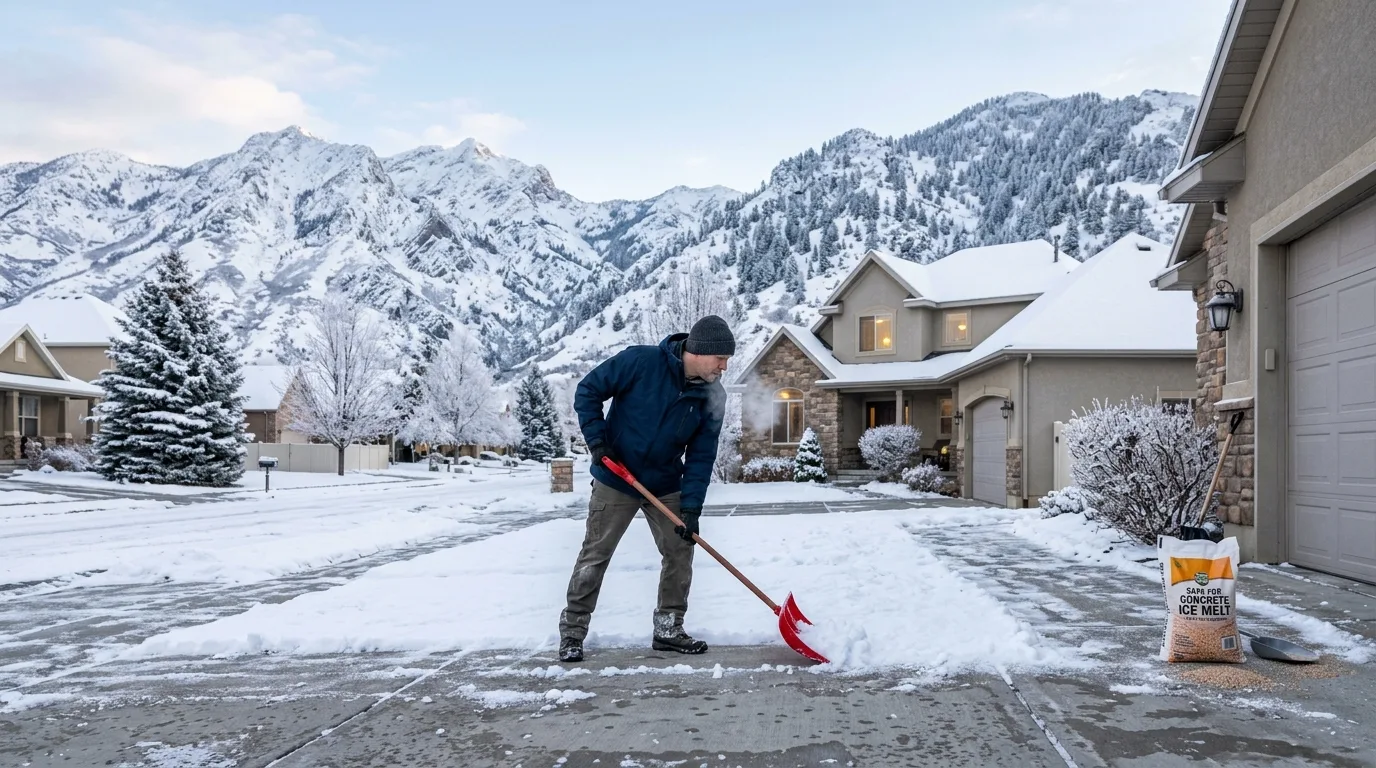
A concrete driveway in Lehi should last 30–50 years — but the actual lifespan on any given driveway depends entirely on installation quality and maintenance habits. Homeowners who seal every 2–3 years and address cracks promptly routinely get 40+ years. Those who never seal and let cracks open through winter after winter are replacing driveways in 15. Here’s exactly what determines which outcome you get in Utah County’s climate.
In this post, we cover expected lifespans for well-maintained and poorly-maintained driveways, the Utah County factors that accelerate aging, and the specific maintenance actions that maximize driveway lifespan in Lehi.
Get a Concrete Driveway Built to Last in Lehi
Lehi Concrete Pros — free estimates for driveway installation throughout Utah County. Call (888) 376-0955.
Why Concrete Driveway Lifespan Varies So Much in Utah
The 30–50 year range for concrete driveways is wide because it captures two very different maintenance realities. A driveway installed with proper sub-base preparation on Utah County soils, sealed every 2–3 years, and repaired promptly when control joints begin to open can legitimately serve a Lehi home for 40–50 years. The same driveway, never sealed, never repaired, fighting against the clay soil movement in neighborhoods like Traverse Mountain or near Thanksgiving Point can show serious deterioration in 15–20 years.
The primary variable in the Lehi market — more than in most other Utah cities — is sub-base preparation quality. Blue clay soils expand when wet and contract when dry, and a compacted granular sub-base is what insulates the slab from that movement. Driveways poured over inadequate base preparation face dramatically shorter service lives regardless of how well they’re maintained above ground.
Expected Lifespan by Maintenance Level in Lehi
Well-maintained concrete driveway (sealed every 2–3 years, cracks filled promptly): 40–50 years before major structural intervention is needed. The driveway may need control joint rerouting or localized patch work during that period, but the structural slab remains sound.
Moderately maintained concrete driveway (sealed every 4–6 years, occasional repair): 25–35 years. Surface wear accelerates when sealing intervals lengthen, and cracks that are allowed to open over 2–3 winters before being filled allow more sub-base water intrusion.
Unmaintained concrete driveway (no sealing, no repairs): 15–20 years in Lehi’s climate. Unsealed concrete on Utah County’s expansive clay soils absorbs water through every winter, and those 126 freeze-thaw cycles widen cracks and delaminate surface layers over time.
How Utah County’s Climate Shortens Driveway Lifespan
Water is the active ingredient in concrete driveway aging — and Utah’s climate delivers it in the most damaging form: freeze-thaw cycling. When water enters concrete through unsealed surface cracks, it freezes at 20°F and expands by roughly 9% in volume. This expansion widening is cumulative — each winter cycle pushes the crack slightly wider than the last. After 10–15 winters without sealing, cracks that started as hairlines have opened to ¼ inch and are now allowing water to reach the sub-base material below.
Summer compounds the problem from the other direction: Lehi’s 93°F July highs and intense UV exposure break down the cement paste in unsealed concrete, causing the surface to chalk, pit, and lose the dense skin that makes concrete resistant to water penetration. This degradation is invisible in early stages but significantly increases water absorption before the next winter arrives.
Practical Uses: What Good Maintenance Looks Like Year by Year
- Year 1–2 after install: Apply a penetrating sealer once the concrete has fully cured (typically 28 days post-pour). This is the most important sealing event — the concrete’s pores are most open and receptive immediately after initial cure.
- Every 2–3 years: Reapply penetrating sealer. Clean the surface first; sealer applied over dirt or oil doesn’t bond correctly. Spring is the best season for resealing in Lehi.
- Every fall, before hard freezes: Walk the driveway and inspect control joints and any known crack locations. Any crack wider than ⅛ inch should be cleaned and filled with a flexible polyurethane joint filler before water freezes in it.
- After every winter, in spring: Inspect again for new damage. Cracks that appeared or widened over winter should be addressed before the next freeze season.
Get an Expert Assessment of Your Lehi Driveway
Call Lehi Concrete Pros at (888) 376-0955. Honest evaluations across Utah County.
How Installation Quality Determines Lifespan
No amount of maintenance can fully compensate for a poorly installed driveway. In Lehi, the installation factors that most directly affect lifespan are:
Sub-base depth and compaction. A 4-inch minimum compacted gravel base is standard; 6 inches is better on clay-heavy soil areas. Sub-base that was placed but not properly compacted will settle over time, creating voids that allow slab sections to crack under load.
Concrete PSI specification. 3,000 PSI is the minimum for residential driveways; 4,000 PSI is better for Utah County’s freeze-thaw demands. Higher PSI means denser concrete with less porosity for water intrusion.
Reinforcement. Rebar at 18-inch centers or fiber-reinforced concrete resists the tensile cracking caused by clay soil movement. Unreinforced concrete on Utah County clay has significantly shorter lifespan.
Control joint placement. Properly spaced and deep control joints direct any cracking to planned locations where repair is simple and water infiltration is limited. Missing or shallow control joints result in random cracking that is harder to seal and maintain.
Frequently Asked Questions
Can I extend my concrete driveway’s life past 30 years in Lehi?
Yes — with proper installation and consistent sealing every 2–3 years, 40–50 year concrete driveway lifespans are realistic in Lehi. The key is treating sealing as a scheduled maintenance item, not an optional expense.
What shortens a concrete driveway’s life most in Utah County?
Unsealed cracks allowing water infiltration through freeze-thaw cycles. This is the single biggest lifespan killer in Lehi’s climate. Secondary factors include poor sub-base preparation on Utah County’s clay soils and using deicing salts that attack concrete surfaces.
How do I know if my driveway still has years left vs. needs replacement?
Key indicators of remaining life: no widespread cracking, no settled sections, surface spalling covers less than 25% of the area, and drainage still moves water away from the house. See our guide on 5 signs your Lehi driveway needs replacement for a detailed assessment framework.
Related:
- 5 Signs Your Lehi Driveway Needs Replacement
- Concrete Driveway Cost in Lehi UT: 2026 Pricing Guide
- New Construction Homes in Lehi Need Concrete Driveways
Install a Concrete Driveway Built for Lehi's Climate
Lehi Concrete Pros — free estimates, proper base prep, and durable results. Call (888) 376-0955.