Concrete vs Asphalt Driveway in Lehi, UT: Which Is Better?
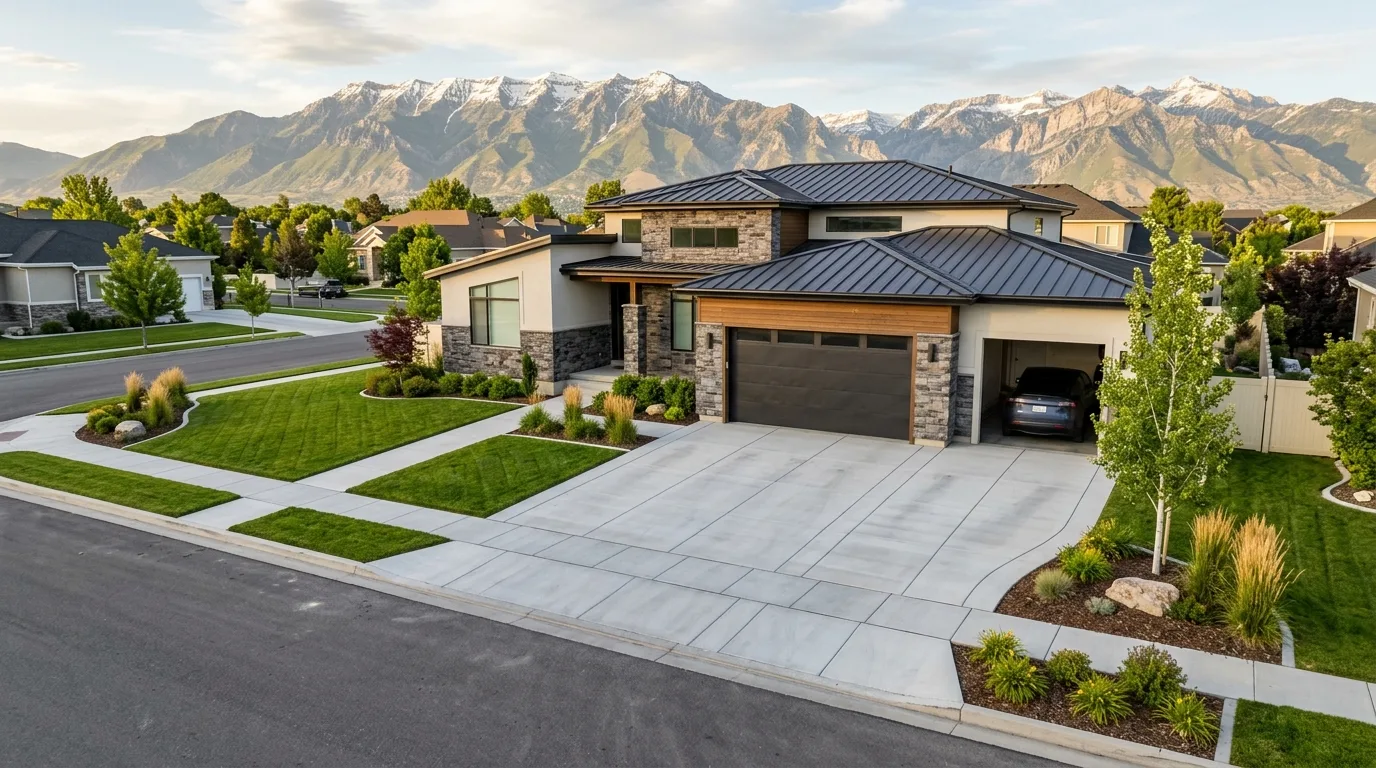
Choosing between concrete and asphalt for your Lehi driveway comes down to more than upfront cost — it’s a 30-year decision affected by Utah County’s clay soils, freeze-thaw cycles, and summer heat that push both materials in very different directions. This post gives Lehi homeowners the comparison they need to make the right call.
In this post, we cover upfront cost differences, lifespan and maintenance requirements, winter performance in Utah’s climate, and total cost of ownership over 30 years for both materials.
Get a Concrete Driveway Estimate in Lehi
Lehi Concrete Pros — free estimates for concrete driveways throughout Utah County. Call (888) 376-0955.
Why This Decision Matters More in Lehi Than Most Cities
Utah County’s climate creates conditions that dramatically affect the long-term performance of both concrete and asphalt driveways. Lehi averages 126 freezing days per year with winter lows hitting 20°F — conditions that cause both materials to behave very differently than they do in more temperate climates. Summer highs averaging 93°F with intense UV exposure add a second dimension of stress. The expansive clay soils found throughout the Thanksgiving and River Point neighborhoods mean sub-base preparation quality determines longevity for both surface types.
Understanding how each material responds to Lehi’s specific conditions is what separates a useful comparison from one built on national averages.
Upfront Cost Comparison in Lehi
Concrete driveway: $5–$8 per square foot for plain gray; $8–$21 for stamped or decorative. A standard two-car driveway starts around $6,000 installed in Lehi.
Asphalt driveway: $3–$5 per square foot installed. The same two-car driveway runs $1,800–$3,000 installed. Asphalt wins on initial cost by a meaningful margin.
The gap narrows significantly when you account for proper base preparation — both materials require the same excavation and compacted gravel sub-base to perform on Utah County’s clay soils. The base cost is the same; the surface material is what changes.
Lifespan and Maintenance in Utah’s Climate
Concrete driveway lifespan in Lehi: 30–50 years with sealing every 2–3 years. Properly installed concrete resists freeze-thaw damage well because it doesn’t soften or rut under summer heat. The primary maintenance requirement is sealing to prevent water penetration and periodic crack filling if control joints develop wider cracks.
Asphalt driveway lifespan in Lehi: 15–20 years with regular maintenance. Asphalt is petroleum-based and softens in summer heat — a significant issue when July temperatures regularly exceed 90°F in Lehi. Utah’s UV intensity accelerates oxidation and surface brittleness, which leads to cracking faster than in cooler climates. Asphalt requires sealing every 2–3 years AND periodic resurfacing every 5–7 years to maintain structural integrity.
How Each Material Performs in Utah Winters
This is the critical comparison for Lehi homeowners. Concrete handles freeze-thaw cycles well when properly sealed. Water doesn’t penetrate sealed concrete, so there’s limited freeze-thaw expansion damage to the surface. The expansion joints in concrete are designed to absorb slab movement, and properly installed concrete remains dimensionally stable through temperature swings from -10°F to 100°F.
Asphalt faces a different challenge. The polymer binders that give asphalt its flexibility at normal temperatures become brittle at extreme cold and soft at extreme heat. This is less problematic in climates with mild temperature swings, but in Lehi’s 110°F annual temperature range, asphalt undergoes more stress cycling than in most markets. Cracking in asphalt typically begins at 5–8 years in Utah County’s climate — earlier than in southern or coastal markets.
Practical Uses: Which Application Favors Each Material?
- High-traffic residential driveways: Concrete’s long lifespan and lower maintenance cost make it the better 30-year choice for most Lehi homeowners.
- Budget-constrained new construction: Asphalt’s lower upfront cost makes sense when cash flow is the primary constraint and the homeowner understands the higher maintenance commitment.
- Decorative or high-curb-appeal applications: Stamped or colored concrete has no asphalt equivalent — concrete wins this category entirely for Traverse Mountain and Thanksgiving area homes.
- Heavy vehicle use: Concrete is significantly superior for driveways that regularly support RVs, trucks, or trailers, which soften asphalt in summer and crack it in winter.
Compare Concrete Options for Your Lehi Driveway
Call Lehi Concrete Pros at (888) 376-0955. Free estimates for all driveway types in Utah County.
30-Year Total Cost of Ownership: Lehi, UT
Assuming a 360 sq ft standard driveway:
Concrete over 30 years:
- Installation: ~$6,500
- Sealing (10 applications): ~$1,500
- Crack repair (1–2 events): ~$500
- Total: ~$8,500
Asphalt over 30 years:
- Installation: ~$2,500
- Sealing (10 applications): ~$1,500
- Resurfacing (3–4 events): ~$5,000–$8,000
- Replacement at year 15–20: ~$3,000
- Total: ~$12,000–$15,000
Over a 30-year period, concrete typically costs less in total than asphalt in Utah County’s demanding climate — despite its higher initial price. This calculation shifts if concrete is not properly sealed or maintained.
Frequently Asked Questions
Which driveway material is better for Lehi winters?
Concrete performs better in Lehi’s winters when properly sealed. Its dimensional stability through freeze-thaw cycles and resistance to UV degradation give it a significant advantage over asphalt in Utah County’s climate.
Can asphalt be repaired more easily than concrete?
Small asphalt cracks and potholes are often patched more easily and inexpensively than concrete repairs. However, asphalt repair patches are visible and temporary — they don’t restore structural integrity. Concrete repairs, done correctly with proper materials, last longer and often integrate more cleanly into the existing surface.
Does concrete require more maintenance than asphalt?
Both require sealing every 2–3 years. Asphalt additionally requires resurfacing every 5–7 years in Utah’s climate. Concrete requires crack filling if control joints open wider than ¼ inch. Overall maintenance burden favors concrete in this climate.
Related:
- Concrete Driveway Cost in Lehi UT: 2026 Pricing Guide
- How Long Does a Concrete Driveway Last in Utah’s Climate?
- 5 Signs Your Lehi Driveway Needs Replacement
Ready to Replace Your Lehi Driveway with Concrete?
Lehi Concrete Pros — free driveway estimates for Lehi and all of Utah County. Call (888) 376-0955.