Best Time to Pour Concrete in Lehi, Utah, UT: Seasonal Guide
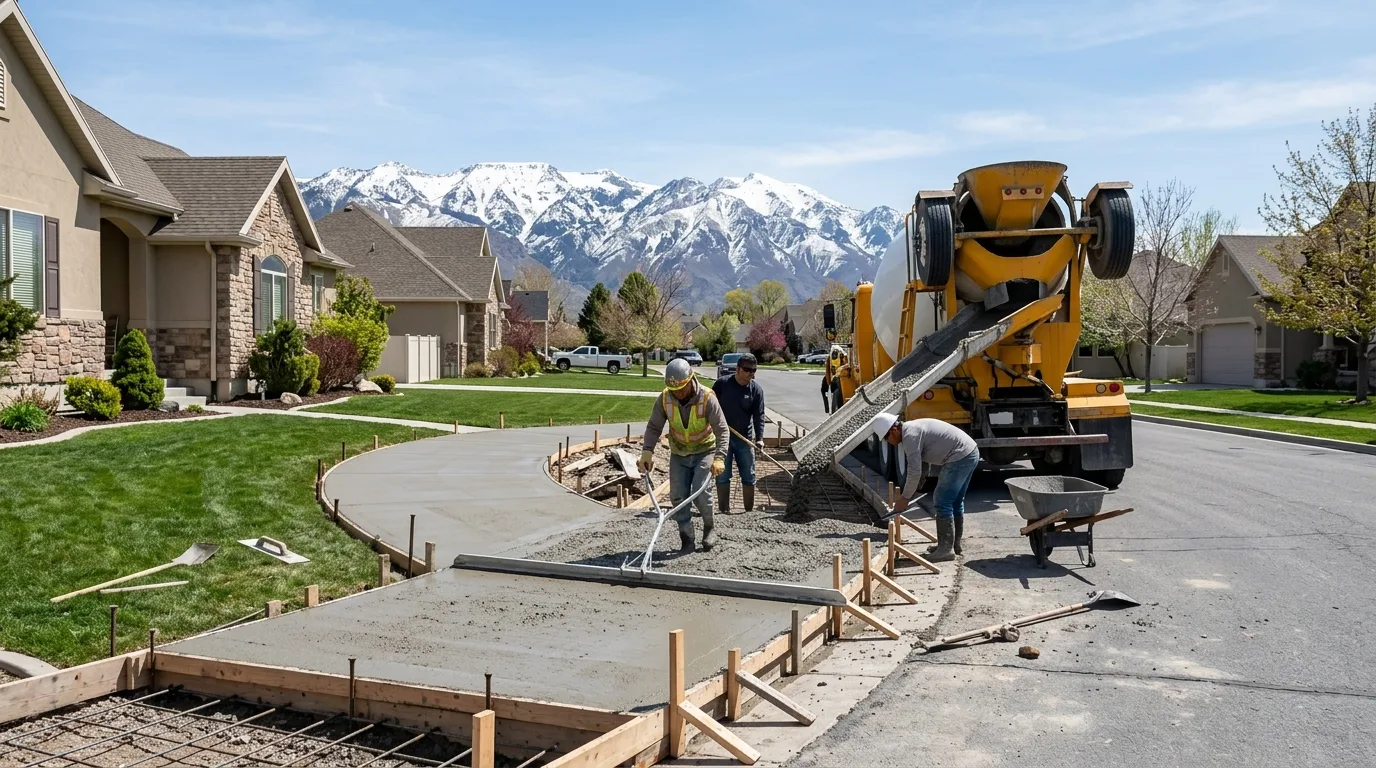
Utah County’s temperature swings — from 20°F winter lows to 93°F summer highs — mean the season you choose for a concrete project in Lehi directly affects both the outcome and the cost. This guide gives you the specific temperature windows, seasonal risks, and scheduling advice that are relevant to this market.
In this post, we cover optimal temperature conditions for concrete pouring, season-by-season analysis for Lehi’s climate, what happens to concrete poured outside ideal windows, and how to book your project at the right time.
Schedule Your Lehi Concrete Project at the Right Time
Lehi Concrete Pros — free estimates, flexible scheduling throughout Utah County. Call (888) 376-0955.
Why Season Matters More for Concrete in Lehi Than Most Cities
Concrete curing is a chemical reaction — the hydration of cement — that is highly temperature-dependent. Too cold (below 40°F) and the reaction slows dramatically, potentially stopping before the concrete reaches design strength. Too hot (above 90°F) and the reaction proceeds too quickly, causing rapid moisture evaporation that creates surface cracking and reduces the final compressive strength.
Lehi’s annual temperature range is particularly challenging because both of these problem zones are regularly reached: January lows often hit 20°F or below, and July highs regularly exceed 90–93°F. The optimal pouring window — when concrete can cure to its full potential without special additives or precautions — is narrower here than in many other markets. Understanding that window, and how to work effectively outside it when necessary, is what differentiates experienced Utah County concrete contractors from those who simply take every job regardless of conditions.
Spring (April–May): The Optimal Season
Spring is the best time to pour concrete in Lehi. April and May typically offer daytime highs of 60–75°F with lows staying above 40°F overnight — the ideal curing range for concrete. Humidity is moderate, which prevents both rapid evaporation from summer heat and the moisture intrusion concerns of late fall.
From a scheduling perspective, spring also offers the widest contractor availability before the peak summer rush. Booking a concrete project in March for an April pour typically offers better scheduling flexibility and sometimes better pricing than booking in June for a July pour. For homeowners who want a patio or driveway ready for summer entertaining, a spring pour delivers exactly that.
Additionally, spring follows the final thaw cycle — any subgrade issues from winter soil movement are visible and can be corrected before the pour, rather than being discovered when the concrete is already in the ground.
Summer (July–August): Proceed with Caution
Summer concrete is possible in Lehi — contractors pour concrete throughout July and August — but it requires specific precautions that a competent contractor should already be planning for. The risks of hot-weather concrete:
Rapid evaporation from fresh concrete surface. At 90°F+ with low humidity and Lehi’s persistent breezes, fresh concrete surfaces can lose moisture faster than the hydration reaction can consume it. This causes plastic shrinkage cracking in the first few hours after placement — cracks that form before the concrete has any strength to resist them.
Accelerated setting time. Hot concrete (high ambient temperature + sun-warmed sub-base) sets faster than the crew is accustomed to in cooler weather. For stamped concrete, this narrows the stamping window significantly. For large pours, sections can begin setting before the crew reaches them with the screed.
A good concrete contractor in Lehi manages hot-weather pours by: starting early in the morning before peak heat, wetting the sub-base before placement to reduce heat absorption, using evaporation retarder on the surface during finishing, and scheduling wet curing immediately after troweling. Ask any contractor explicitly about their hot-weather protocol before booking a summer pour.
Fall (September–October): Second-Best Season
September and October offer conditions nearly as good as spring: temperatures typically hold between 55–75°F, humidity is manageable, and there’s no monsoon moisture complication. Fall is particularly good for stamped concrete and resurfacing work because the stamping and sealing windows are predictable.
The primary fall consideration is timing. Early October is reliable; late October risks the first hard frosts, which can affect the final cure of concrete poured at the edge of the season. Most Lehi contractors aim to finish exterior concrete pours by the end of October to avoid having fresh concrete in the ground when the first hard freeze hits.
Winter (November–March): Possible, But Costs More
Winter concrete in Lehi is not impossible — it’s poured on commercial job sites and for urgent repair needs throughout the winter months. But it requires cold-weather concrete practices that add cost:
Heated mix water: The concrete plant adjusts mix water temperature to compensate for cold ambient temperatures, maintaining concrete temperature at placement above 50°F.
Insulating blankets: Fresh concrete must be kept above 40°F for the first 7 days of curing. Insulating blankets placed immediately after finishing protect the surface from ambient cold.
Accelerating admixtures: Accelerators (calcium chloride or non-chloride alternatives) speed the hydration reaction, allowing concrete to develop strength faster and reducing the time it needs protection from freezing.
Heated enclosures: For large pours below 20°F ambient temperature, a heated enclosure over the work area is necessary — a significant cost addition.
Book Your Lehi Concrete Project for the Right Season
Call Lehi Concrete Pros at (888) 376-0955. We schedule projects for the best curing conditions in Utah County.
Practical Uses: Matching Project Type to Season in Lehi
- New driveway or large patio: April–May or September–October. Large pours benefit most from consistent temperature during multi-hour curing windows.
- Stamped concrete: April–May is best. The stamping window is most predictable at 65–75°F. Avoid July–August if possible.
- Concrete repair (crack filling, patching): March–October. Repair mortars have wider temperature tolerances than fresh concrete pours, but still perform best above 50°F.
- Resurfacing overlay: May–September. Resurfacing overlays are sensitive to temperature during application — avoid below 50°F and above 90°F.
- Foundation pour: April–October for optimal results. Winter foundation pours for new construction are done with cold-weather protocols when the construction schedule requires it.
How to Secure Your Preferred Season in Lehi
The best time to book a concrete project in Lehi is 6–8 weeks before your target pour date. Spring slots fill up by March; summer by May. Contractors in Utah County are typically scheduling 4–6 weeks out during peak season. For a spring patio before summer entertaining season, contact contractors in February or early March. For a fall project, reach out in August.
Frequently Asked Questions
Can concrete be poured in January in Lehi?
Yes, with cold-weather concrete practices — heated mix water, insulating blankets, and possibly accelerating admixtures. The incremental cost for winter concrete measures runs $300–$800 for a typical residential project. For non-urgent residential projects, waiting for spring is usually the better financial and quality choice.
Why is summer concrete sometimes problematic in Lehi?
Summer heat above 85°F accelerates concrete setting and increases the risk of plastic shrinkage cracking from rapid surface evaporation. Lehi’s low humidity makes evaporation faster than in more humid climates. Experienced local contractors manage this with early morning starts, evaporation retarder, and immediate wet curing — but these additional measures add complexity and slight cost.
Does the season affect concrete pricing in Lehi?
Yes — winter concrete typically costs more due to cold-weather measures. Summer pricing is sometimes slightly elevated due to high demand and extended project timelines from heat management requirements. Spring and fall tend to offer the most straightforward pricing without seasonal premiums.
Related:
- Why Lehi Homes Need Rebar in Concrete
- Do I Need a Permit for Concrete Work in Lehi?
- When to Repair vs. Replace Concrete in Lehi
Pour Concrete at the Right Time for Maximum Strength in Lehi
Lehi Concrete Pros — seasonal expertise, Utah County experience. Call (888) 376-0955.