When to Repair vs Replace Concrete in Lehi, UT: A Guide
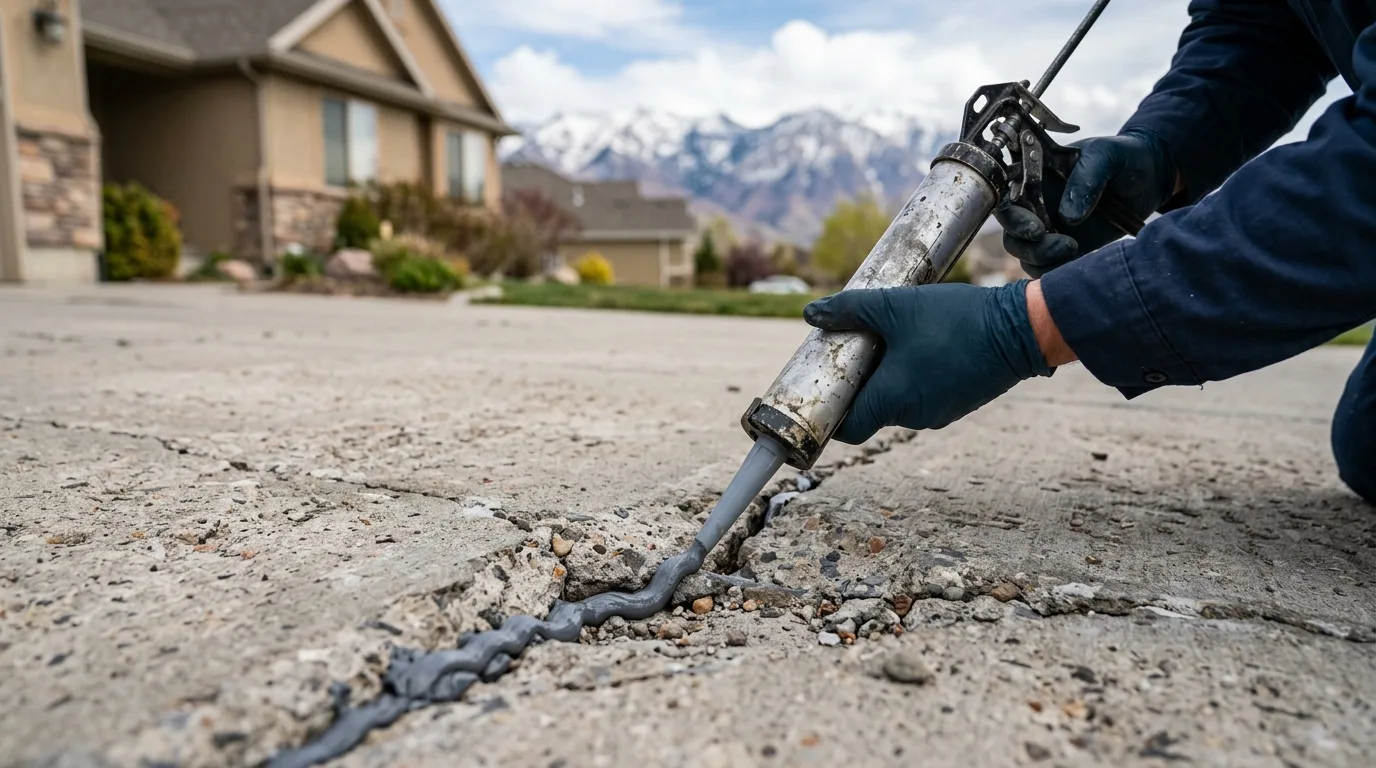
The repair vs. replace question is one that most Lehi homeowners face every few years as Utah County’s freeze-thaw cycles and clay soils gradually wear down driveways, patios, and walkways. Getting this decision right saves thousands of dollars — both from spending on repairs that won’t hold and from replacing concrete that had years of life left. This guide gives you a practical framework for making the right call.
In this post, we cover the assessment criteria that distinguish repairable from replacement-level damage, cost comparisons for both options in Lehi, the Utah County factors that affect which direction makes sense, and when the honest answer is replacement even if the surface “looks” fixable.
Get an Honest Concrete Assessment in Lehi, UT
Lehi Concrete Pros — we tell you what you actually need. Free assessments throughout Utah County. Call (888) 376-0955.
Why This Decision Is More Complex in Lehi Than in Other Markets
The repair vs. replace decision depends heavily on whether the damage is cosmetic or structural — and that distinction is harder to assess on Utah County’s expansive clay soils than on stable soils in other markets. Surface cracks that appear cosmetic often indicate underlying clay soil movement that hasn’t stopped. A repair applied to a surface with continuing sub-base movement will fail within 1–2 winters, regardless of how well the repair material bonds to the existing concrete.
In Lehi’s climate, the key question isn’t just “what does the surface look like?” but “why is it damaged, and has the underlying cause stopped?” Spring assessments after the ground thaws are the most informative time to evaluate concrete damage in this area, because the full extent of winter’s impact on both the surface and the sub-base is visible.
When Repair Makes Sense in Lehi
Concrete repair is cost-effective when:
Damage is confined to the surface layer. Hairline to ¼-inch cracks, surface spalling covering less than 20% of the area, and surface discoloration are appropriate candidates for repair. These are cosmetic issues that haven’t compromised the slab’s structural function.
The slab is structurally sound. No sections have settled more than ½ inch, no sections rock under foot traffic, and no widespread full-depth fractures are present. The concrete’s structural function is intact — only the surface needs work.
The underlying cause has been resolved. If cracking was caused by a drainage issue that has since been corrected, or if clay soil movement has stabilized in that area, repair is durable. If the condition causing the damage is ongoing, even excellent repair materials will re-fail.
The cost of repair is less than 40% of replacement. When repair costs are significantly less than replacement and the slab has many years of structural life remaining, repair provides the better return on investment.
When Replacement Makes Sense in Lehi
Replacement is the better financial decision when:
Multiple sections show full-depth cracking. Full-depth fractures in two or more separate sections indicate that the slab’s structural integrity is compromised across the surface, not just in isolated areas.
Settlement exceeds 1 inch in any section. Sections that have dropped more than 1 inch create drainage failure and trip hazards, and indicate that sub-base material has been displaced — a condition that patching cannot address.
Repair costs exceed 50% of replacement. When the repair scope is large enough to approach replacement cost, the additional investment for a fresh slab with proper sub-base prep typically delivers far better long-term value.
The concrete is more than 30 years old with no sealing history. Old unsealed concrete in Lehi often has internal degradation that isn’t visible from the surface. Extensive repair investment in a slab with compromised structural concrete is unlikely to deliver long service life.
Cost Comparison: Repair vs. Replace in Lehi
Concrete repair costs in Lehi:
- Crack filling: $3–$7 per linear foot
- Surface spall repair: $4–$8 per sq ft
- Full resurfacing overlay: $3–$5 per sq ft
- Slabjacking (lifting settled sections): $3–$7 per sq ft
Concrete replacement costs in Lehi:
- Demo + new driveway (plain gray): $7–$11 per sq ft (combined)
- Demo + new patio (plain): $6–$10 per sq ft
- New installation on prepared base (no demo): $5–$8 per sq ft
A 400 sq ft driveway with widespread surface damage and spalling covering 30% of the area might cost $1,800–$3,200 to resurface vs. $2,800–$4,400 to replace completely. In that scenario, resurfacing makes sense if the slab is structurally sound. If the slab has multiple settled sections or sub-base voids, the extra investment in full replacement delivers far better outcomes.
Not Sure Which Your Lehi Concrete Needs? Get a Free Assessment.
Call Lehi Concrete Pros at (888) 376-0955. Honest advice, no upsell pressure, serving all of Utah County.
Practical Uses: Real Scenarios for Lehi Homeowners
- Spring driveway cracks after a hard winter: 3–4 isolated cracks less than ¼ inch wide with no settlement → repair is appropriate and cost-effective.
- Patio with multiple settled sections and widespread surface wear: 2+ sections settled more than ½ inch and spalling covers 35% of the surface → replacement is the better investment.
- Old cracked walkway with partial spalling: 20-year-old walkway, single crack through the middle but no settlement → repair (crack fill + resurfacing) is worth attempting first.
- Foundation area showing cracking near the house: Any concrete cracking near the foundation that also shows drainage issues → replace with proper drainage correction; this is not a candidate for surface repair.
How to Get an Honest Assessment in Lehi
The challenge with the repair vs. replace decision is that a contractor who primarily sells replacement will skew toward replacement, and a repair-only contractor will skew toward repair. The most useful assessment comes from a contractor who performs both and will tell you clearly which they recommend and why — including the specific condition indicators that drove their recommendation.
Ask any contractor assessing your concrete: What is causing the damage? Is the underlying cause still active? What does the sub-base look like based on visual and physical inspection? How long do you expect this repair to last given current conditions? A contractor who can’t answer these questions specifically is not giving you a genuine assessment.
Frequently Asked Questions
How do I know if my concrete is repairable or needs replacement?
Key repair indicators: damage is surface-only, less than 20% of the area is affected, no settlement, no full-depth fractures. Key replacement indicators: multiple settled sections, full-depth fractures across the slab, repair cost exceeds 50% of replacement, slab is 30+ years old with no maintenance history. See our guide on 5 signs your Lehi driveway needs replacement for specific indicators.
Will concrete repair in Lehi last through winter?
Properly done repairs using freeze-thaw rated materials and addressing the root cause of damage can last 5–15 years in Lehi. Repairs that don’t address the underlying drainage or soil issue typically re-open within 1–2 winters. Material selection matters — standard patching compounds often fail in Utah County’s climate; use polymer-modified repair mortars rated for freeze-thaw exposure.
What’s the minimum repair worth doing before an Lehi winter?
At minimum, fill any crack wider than ⅛ inch with a flexible polyurethane joint filler before the ground freezes. This $20–$100 action per crack prevents water from entering and expanding the crack through the winter cycle. It’s the single most cost-effective concrete maintenance action you can take in Lehi.
Related:
- 5 Signs Your Lehi Driveway Needs Replacement
- Why Lehi Homes Need Rebar in Concrete
- Best Time to Pour Concrete in Lehi, Utah
Get Your Lehi Concrete Assessed for Free
Lehi Concrete Pros — repair or replace, we give you the honest answer. Call (888) 376-0955.