How to Maintain Stamped Concrete in Utah, UT Winters
A stamped concrete patio in Lehi can look excellent for 30+ years — or it can look tired and faded within a decade. The difference usually comes down to one decision repeated every 2–3 years: resealing. Utah County’s winters are harder on decorative concrete surfaces than most homeowners realize, and the maintenance habits that protect stamped concrete here are more specific than what you’d need in a warmer climate.
In this post, we cover the annual maintenance schedule for Lehi stamped concrete patios, how to choose the right sealer for Utah winters, what snow removal practices protect and damage decorated concrete, and how to identify early signs of seal failure before winter damage occurs.
Is Your Lehi Stamped Patio Due for Maintenance?
Lehi Concrete Pros provides sealing and maintenance services — call (888) 376-0955.
Why Stamped Concrete Maintenance Is Different in Lehi
The homeowner maintenance habits that worked in a previous home in a warmer climate may be insufficient for Lehi’s conditions. A decorative concrete patio in Phoenix might go 4–5 years between sealings with no visible damage. The same patio in Lehi — with 126 freeze-thaw cycles annually, winter lows of 20°F, and intense summer UV — will show visible deterioration within 2–3 years without proper sealing.
The reason is the sealer film itself. Penetrating sealers protect stamped concrete by blocking water from entering the surface pores. But the sealer film is also exposed to UV radiation all summer and freeze-thaw stress all winter. Over 2–3 years, the film thins and develops micro-fractures that allow water infiltration to begin. That water freezes in the color layer, which causes the color to delaminate and the surface texture to begin eroding from the inside out.
The Annual Stamped Concrete Maintenance Schedule for Lehi
Each spring (April–May): Inspect the entire patio surface carefully after the final thaw. Look for: color fading or whitening in sections, surface delamination or flaking, wider openings at control joints, water absorption when you pour a small amount of water on the surface. If water beads up and rolls off, the sealer is still performing. If it soaks in quickly, the sealer needs immediate reapplication.
Each fall (September–October): This is your pre-winter protection check. Clean the patio thoroughly with a pH-neutral concrete cleaner — not a pressure washer on high setting, which can damage the surface texture. Inspect control joints for any openings wider than ⅛ inch. Fill opened joints with a flexible polyurethane joint filler before the first freeze. This prevents water from entering the joint, freezing, and expanding the opening over winter.
Every 2–3 years: Apply a full resealing. In Lehi’s climate, every 2 years is optimal; every 3 years is the maximum interval before visible degradation typically begins. Fall application (September–October) is preferred — the sealer cures before hard freezes arrive, and the protected surface goes into winter at full strength.
Choosing the Right Sealer for Utah County Winters
Solvent-based penetrating sealer: Best option for Lehi’s freeze-thaw exposure. Penetrates below the surface and chemically bonds with the concrete rather than forming a film on top. More durable in temperature-cycling environments. Generally more expensive than water-based options but delivers significantly better freeze-thaw resistance.
Water-based acrylic sealer: Lower cost, easier application, and sufficient for mild climates. In Lehi’s winters, water-based acrylics often peel and delaminate within 2–3 years, particularly on horizontal surfaces that experience standing water and ice. Not recommended as the primary sealer for Lehi stamped concrete that will see winter use.
Epoxy or polyurethane topcoat: High durability for high-traffic commercial applications. Not typically necessary for residential stamped patios but sometimes used on stamped driveway surfaces that see regular vehicle traffic.
The key question to ask any sealer product or contractor: is this sealer rated for freeze-thaw exposure and what is the tested cycle rating? This specification should be in the product technical data sheet.
Practical Uses: Snow and Ice Removal That Protects Your Patio
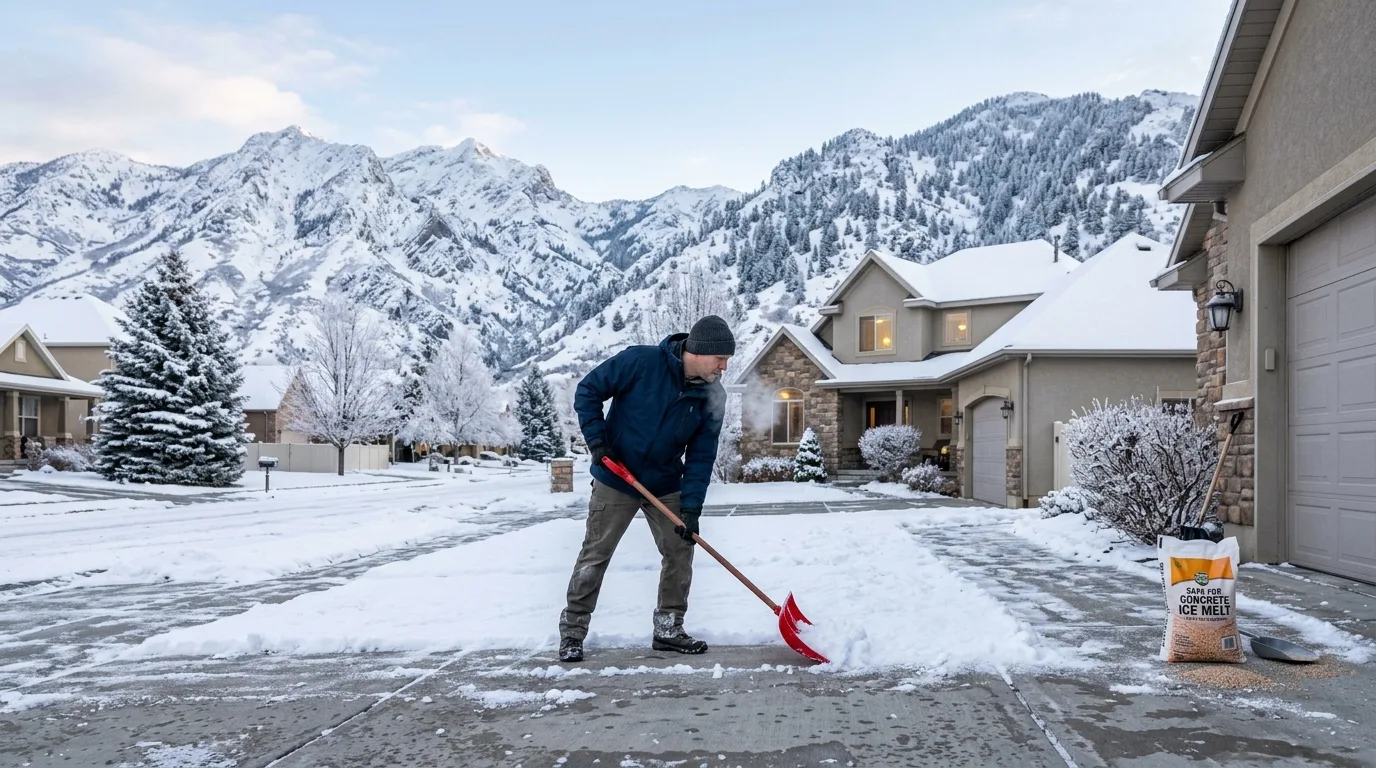
- Use plastic shovels, not metal: Metal shovels and snow blower chutes can scratch and chip stamped surface texture. Plastic blade shovels are the appropriate tool for clearing snow from decorative concrete.
- Avoid rock salt: Sodium chloride (rock salt) is the most damaging deicing product for concrete surfaces. It attacks the concrete matrix and accelerates surface spalling, especially on colored surfaces. This is true for all concrete, but stamped concrete is particularly vulnerable because surface damage affects both color and texture.
- Use calcium chloride or magnesium chloride: These deicers are less damaging to concrete than sodium chloride. Calcium chloride works at lower temperatures (down to -25°F) and is effective in Lehi’s coldest nights. Magnesium chloride is gentler on adjacent landscaping.
- Sand for traction: Applying sand over ice provides traction without chemical damage. Clean it up thoroughly in spring before it abrades the surface during sweeping.
- Let the sun do work when possible: Lehi’s 228 sunny days include many winter days where the sun alone melts ice off a south-facing patio. A light layer of calcium chloride to accelerate the process is preferable to heavy salt application.
Protect Your Lehi Stamped Patio Before Winter
Call Lehi Concrete Pros at (888) 376-0955. We provide sealing and maintenance services throughout Utah County.
Signs Your Stamped Concrete Needs Immediate Attention
Color whitening or efflorescence: White chalky deposits on the surface indicate moisture is moving through the concrete from below, carrying calcium deposits to the surface. This is an early warning sign of sealer failure and sub-base drainage issues. Address immediately before the next winter cycle.
Surface flaking or delamination: Small chips of the color layer separating from the underlying concrete indicate freeze-thaw damage has begun. This is repairable in early stages with color-matched polymer patch material, but left unaddressed through another winter it will spread significantly.
Control joints opening wider than ¼ inch: Joints that have opened beyond ¼ inch are allowing substantial water infiltration. Have them cleaned and refilled with flexible joint filler before the next freeze season, regardless of when you’re due for full resealing.
Frequently Asked Questions
How often should I reseal stamped concrete in Lehi?
Every 2 years is optimal for Lehi’s climate; every 3 years is the maximum interval before visible degradation typically begins. Spring resealing is convenient for inspection purposes; fall application provides maximum protection going into winter.
Can I reseal stamped concrete myself?
Yes, with the right materials. Use a solvent-based penetrating sealer rated for freeze-thaw exposure, clean the surface thoroughly first, and apply in temperatures between 50–85°F. The work itself is straightforward; the material selection is the most important decision. Avoid water-based acrylics and hardware store concrete sealers not specifically rated for freeze-thaw cycling.
Does deicing salt really damage concrete in Lehi?
Yes — sodium chloride deicers attack the cement matrix in concrete and accelerate surface spalling, particularly on colored or stamped surfaces. The effect is cumulative over several winters. Switching to calcium chloride or magnesium chloride deicers and cleaning residue off the surface in spring significantly reduces chemical damage.
Related:
- Stamped Concrete Patio Cost in Lehi: Complete 2026 Guide
- Stamped Concrete vs. Pavers: Which Is Right for Your Lehi Patio?
- Best Time to Pour Concrete in Lehi, Utah
Keep Your Lehi Stamped Patio Looking Great for Decades
Lehi Concrete Pros — maintenance services and free consultations for Utah County homeowners. Call (888) 376-0955.