5 Signs Your Concrete in Lehi, UT Needs Repair This Spring
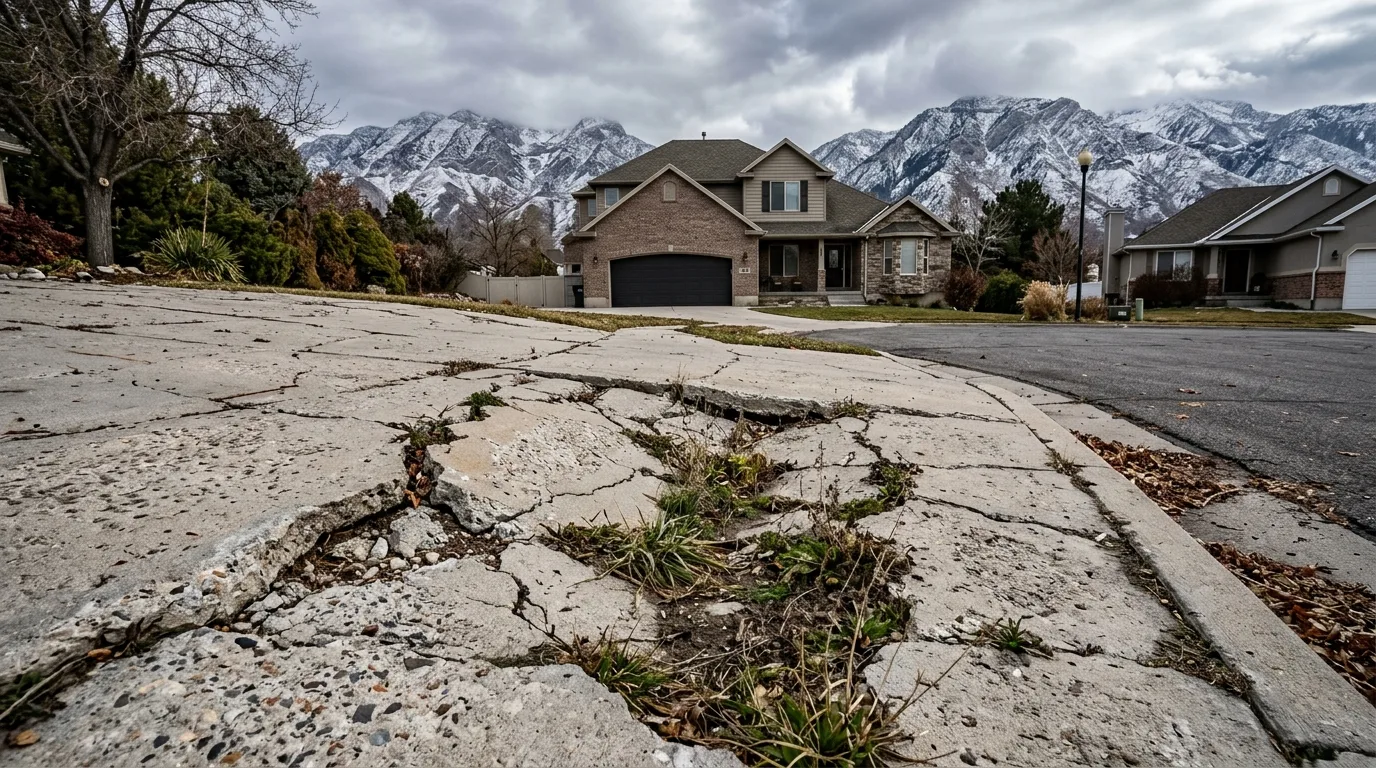
Spring in Lehi is the season most homeowners discover what winter did to their concrete. After months of freeze-thaw cycling, expanded cracks, and frost heave, the damage that was hidden under snow becomes visible in April — and addressing it before next winter is the most cost-effective approach. These are the 5 signs your Lehi concrete needs attention this spring.
In this post, we cover the 5 most common concrete problems visible after Lehi winters, what causes each one, what repair is appropriate, and why spring is the right time to address them.
Spring Concrete Repair in Lehi — Schedule Your Assessment
Lehi Concrete Pros — honest repair assessments throughout Utah County. Call (888) 376-0955.
Why Spring Is the Most Important Assessment Time in Lehi
The concrete damage caused by Utah County’s winters becomes fully visible only after the ground completely thaws in late March and April. During winter, frost heave may lift slab sections that settle back down imperfectly when the ground thaws — sometimes revealing voids beneath the slab that weren’t visible in fall. Cracks that were ⅛ inch in October may be ¼ inch in April after water entered, froze, expanded, and widened them through 30+ freeze cycles over the winter.
Spring is also the optimal season for repair. April through May temperatures of 55–75°F allow repair mortars, crack fillers, and resurfacing overlays to cure at full strength. The ground has stabilized after thaw, providing accurate grade information. And repairing before next fall means one full season of protection before winter testing the repaired areas.
Sign 1: Cracks That Weren’t There — or Were Narrower — in Fall
New cracks appearing each spring are the clearest indicator of active freeze-thaw damage. Water that entered micro-scale surface imperfections over winter has expanded by roughly 9% as it froze, converting hairline cracks into visible ones. If you photograph your driveway or patio in October and again in April, any crack that appears or widened during winter is experiencing active freeze-thaw damage that will continue expanding if not addressed.
The appropriate repair for fresh post-winter cracks depends on width. Cracks under ¼ inch are appropriate for flexible polyurethane crack filler applied in spring. Cracks wider than ¼ inch need more thorough evaluation — they indicate that either the crack is already deep enough to allow meaningful water infiltration or that soil movement beneath the slab is contributing to the cracking.
Sign 2: White Chalky Deposits (Efflorescence) on the Surface
Efflorescence — white crystalline deposits on the concrete surface — appears when moisture moves through the concrete and carries calcium deposits to the surface as the water evaporates. Seeing efflorescence on your Lehi driveway or patio in spring means moisture has been moving through the concrete all winter, either because the sealer has failed or was never applied.
Efflorescence itself is harmless and can be cleaned with a dilute acid wash. But its presence indicates that the sealer protection has been compromised and the concrete has been absorbing freeze-thaw cycling moisture. Left unaddressed, this moisture movement eventually causes surface delamination — the outer surface layer separates from the underlying concrete in thin chips or flakes.
Sign 3: Surface Pitting or Spalling in Previously Smooth Areas
Surface spalling — where the concrete surface breaks away in chips, pits, or flakes — is caused by freeze-thaw water that entered the top ¼ inch of the concrete and expanded repeatedly. Small localized pitting (less than 10% of the surface area) is addressable with polymer-modified patch mortar applied in spring. Widespread pitting across the slab indicates that the sealer has failed across the whole surface and a full resurfacing overlay is needed.
Spring pitting that appears after the application of sodium chloride deicers over winter has a different cause — the salt chemically attacks the cement paste in addition to promoting freeze-thaw entry. This is one of the most common reasons Lehi driveways develop surface spalling prematurely. Switching to calcium chloride or magnesium chloride deicers and treating the damage promptly in spring with the right polymer mortar stops the acceleration.
Sign 4: Sections That Have Lifted, Settled, or Tilted
If any section of your driveway or patio is noticeably different in elevation from where it was last fall — higher from frost heave or lower from settlement — the sub-base beneath that section has been affected by winter. Frost heave that lifts sections during winter sometimes partially resolves when the ground thaws, but sections that have settled after heave often don’t return to their original position, creating permanent differential elevation.
Sections that have settled ½ inch or less can sometimes be addressed by slabjacking — pumping grout beneath the slab to re-level it. Sections settled more than 1 inch or those with sub-base voids confirmed by probing typically require replacement to properly address the underlying condition.
Address Spring Concrete Damage in Lehi Before Next Winter
Call Lehi Concrete Pros at (888) 376-0955. Spring repair window is April–May for best conditions.
Sign 5: Water Pooling on Slab Surfaces After Spring Rain
A properly graded driveway or patio should drain water away within a few minutes of a rainstorm. Puddles that persist longer than 15–20 minutes indicate that the drainage slope has been compromised — either by settlement that has reversed the original drainage direction, or by slab heave that has created low spots.
Standing water on concrete surfaces creates the worst possible condition for freeze-thaw cycling: saturated concrete going into winter. Water that pools on the surface eventually penetrates through the concrete, finds the sub-base, and saturates the clay beneath. When that saturated clay freezes in November, the expansion stress on the overlying slab is far greater than if the sub-base had been dry going into winter.
Fixing drainage issues before fall freeze season dramatically reduces the rate of concrete deterioration. The correction depends on cause — slab leveling if settlement is the issue, drainage channel installation if the site grading is the problem.
Practical Uses: Spring Repair Priority Guide
- First priority (address immediately): Cracks wider than ¼ inch, settled sections with drainage failure, efflorescence with visible delamination beginning.
- Second priority (address by June): Isolated spalling under 10% of the surface, hairline cracks that appeared this winter, sealer failure indicated by water absorption test.
- Third priority (address before fall): Widespread efflorescence without visible delamination, sealer that passed the water test but hasn’t been renewed in 3+ years.
Frequently Asked Questions
When is the best time to do concrete repairs in Lehi?
April through May is the optimal window — temperatures hold between 50–75°F, which allows repair mortars and sealers to cure at full strength. This window also gives the repair a full season to cure and be tested before winter. See our full seasonal guide at best time to pour concrete in Lehi.
Can I repair spring concrete damage myself?
Small crack filling with tube-applied polyurethane filler is a manageable DIY project. Spall patching, resurfacing overlays, and any work involving the sub-base should be done by an experienced concrete contractor to ensure proper material selection and application.
Does concrete repair require a permit in Lehi?
Surface repairs — crack filling, patching, resurfacing — do not require permits in Lehi. Structural repairs that involve removing and replacing full slab sections may require a permit depending on scope. See our full Lehi concrete permit guide.
Related:
- When to Repair vs. Replace Concrete in Lehi
- Best Time to Pour Concrete in Lehi, Utah
- Why Lehi Homes Need Rebar in Concrete
Spring Concrete Repair Throughout Lehi and Utah County
Lehi Concrete Pros — honest assessments, free estimates. Call (888) 376-0955 now before the spring rush fills up.